
Colorado Home Insurance Before Winter: Frozen Pipes, Ice Dams, and Water Coverage Gaps
Before the first hard freeze, check how your Colorado home policy treats burst pipes, ice dams, water backup, and winter absences.
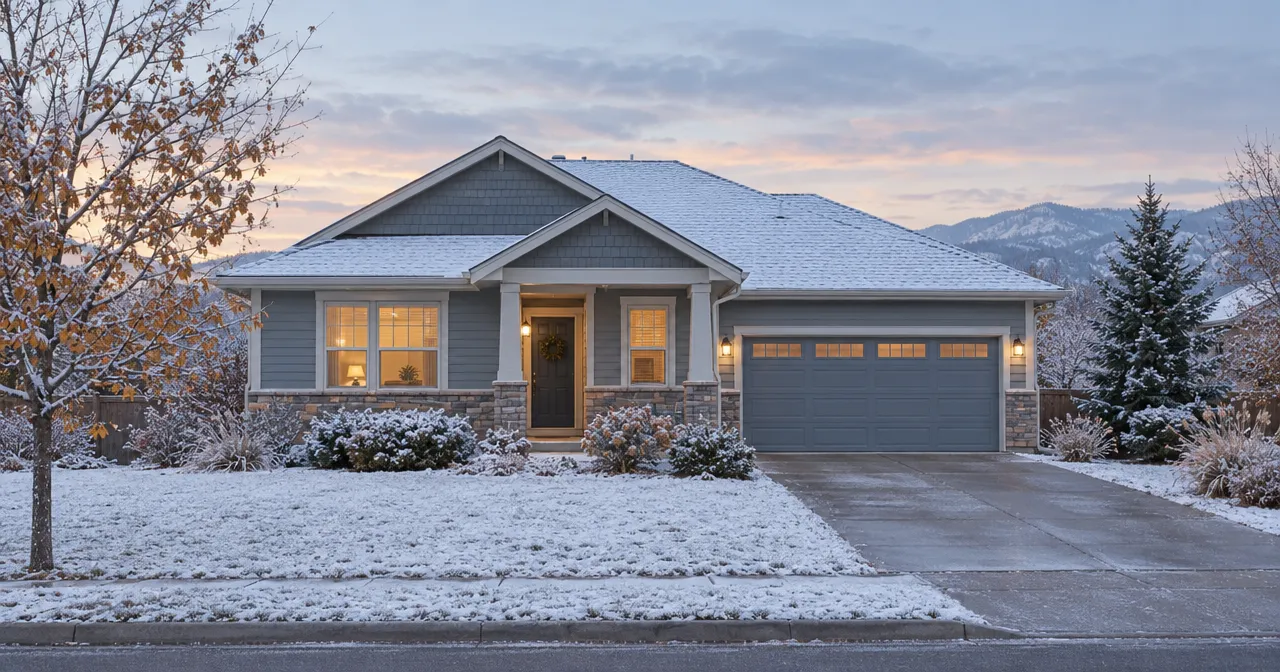
A pipe can freeze while you are away for a weekend. Snow can melt at the roof edge and find its way into a ceiling. A backed-up drain can wet the same finished basement as a burst pipe—but lead to a very different insurance answer. For homeowners around Fort Lupton, Brighton, Firestone, and the wider Front Range, fall is a good time to prepare the house and review the policy.
The useful question is not simply, “Does home insurance cover winter damage?” It is: What caused the water to enter, what conditions does my policy place on coverage, and what would I pay myself? Those answers can differ even when two rooms look equally damaged. This guide separates prevention from coverage so you can make a short, practical plan before temperatures drop.
First, identify the source of the water
It helps to think about four different situations rather than one broad category called “water damage”:
| What happened | What to ask about coverage |
|---|---|
| An indoor supply pipe froze, burst, and suddenly soaked a wall or floor | Does the policy cover resulting sudden and accidental water damage, and what freeze-prevention conditions apply? |
| Meltwater backed up behind an ice dam and entered near the roof edge | Does the policy cover this particular roof or interior-water loss, and are there exclusions for deterioration or maintenance? |
| A sewer line or sump pump sent water back into a basement | Is there a water-backup endorsement, and what are its limit and deductible? |
| Snowmelt or runoff accumulated outside and flowed into the house at ground level | Is there a separate flood policy? Standard homeowners coverage typically does not cover flooding. |
These are illustrations, not claim decisions. Your declarations page, endorsements, exclusions, the cause of the loss, and the insurer’s investigation control the actual answer. The Colorado Division of Insurance homeowner toolkit specifically flags water-backup coverage as an optional endorsement to review.
Frozen pipes: prevention and policy conditions go together
The National Association of Insurance Commissioners (NAIC) explains that homeowners policies often cover the resulting water damage when a pipe freezes and bursts, provided the homeowner took reasonable steps to prevent freezing. Policies generally address keeping heat on or shutting off the water when a home is vacant. That is different from promising that every plumbing repair, frozen pipe, or cleanup bill will be paid. Read your own contract’s wording about freezing, vacancy, negligence, and the building’s heating and water systems. The NAIC’s burst-pipe coverage explainer is a useful starting point, not a substitute for the policy.
Before the first hard freeze, walk through the home with these steps in mind:
- Disconnect garden hoses. Drain outdoor faucets or hose bibs where the plumbing setup allows it, and winterize irrigation lines according to the system’s instructions. A hose left attached can keep water trapped near an exterior wall.
- Look for exposed plumbing. Check crawl spaces, garages, attics, unfinished basements, and pipes along outside-facing walls. Insulation and sealing drafts around vulnerable areas may reduce freeze risk. Hire a qualified professional if access or plumbing work is beyond what you can safely do.
- Keep indoor heat on. If you are leaving during cold weather, do not assume a vacant house can be left unheated. Ask your insurer exactly what its policy requires for maintaining heat or shutting off and draining water; the details vary.
- Know the main shutoff. Find the valve, make sure an adult in the household can use it, and keep a plumber’s number available. A quick shutoff can limit damage after a pipe breaks.
- Watch vulnerable rooms during a cold snap. Cabinet doors under sinks on exterior walls can be opened to let warm indoor air circulate. In unusually cold conditions, a small drip may help protect a vulnerable line. Consider water use and local guidance rather than leaving faucets running unnecessarily.
The NAIC’s winter home-preparation guidance also discusses hoses, pipes, gutters, and roof inspections. These steps lower risk; they do not create coverage where the policy excludes it.
What if a pipe is already frozen?
A weak trickle or no flow at one faucet may be an early warning. Do not use an open flame to thaw a pipe. If you suspect a break, shut off the water if it is safe to do so and call a plumber. Watch for leaks when water begins flowing again: a split may become apparent only as the pipe thaws. If water reaches electrical outlets or fixtures, avoid the area and seek appropriate professional help.
Ice dams and roof leaks are not the same as ground-level flooding
An ice dam can form when snow on a roof melts and refreezes at a colder edge. Water can then work back toward roofing materials and enter the house. A stain near an exterior wall or damp insulation can be a clue; it is not, by itself, proof of what caused the leak. Clogged gutters, damaged flashing, old roofing materials, and heat escaping through the attic can all complicate the diagnosis.
For prevention, clear leaves from gutters and make sure downspouts carry water away from the foundation. Ask a roofer to inspect suspect roof areas and an appropriate contractor to evaluate attic insulation or ventilation if ice dams keep returning. Avoid climbing onto an icy roof or chipping at ice where you could be injured or damage the shingles. A professional can suggest safer ways to handle snow buildup.
For insurance, ask whether a sudden ice-dam-related leak and resulting interior damage are covered under your form, and whether exclusions or limitations apply to roof deterioration, repeated seepage, or failure to maintain the roof. A policy is not a maintenance agreement: replacing worn-out materials is different from paying for covered damage caused by a specific event. If a room cannot be occupied after a covered loss, also ask whether your additional living expenses coverage would help with necessary extra lodging costs, and for how long.
Do not confuse roof-edge seepage with runoff entering at ground level. Snowmelt flowing across the yard and into a basement can be flooding, which typically requires separate flood insurance. FEMA’s National Flood Insurance Program explains the distinction between outside floodwater and indoor plumbing losses. A water-backup endorsement is not a replacement for flood coverage, and a flood policy does not automatically substitute for backup coverage.
The basement question: backup, seepage, or a broken pipe?
A finished basement can contain flooring, drywall, appliances, stored belongings, and mechanical equipment. Yet the fact that everything is wet does not tell you which policy section applies. Try to identify where the water first appeared: around a cracked supply line, from a drain, through a foundation wall, or from overland runoff at a door or window well. Do not expose yourself to unsafe water or electrical hazards in order to investigate; a qualified plumber or restoration professional can help determine the source.
A water-backup endorsement may address water that backs up through sewers or drains or overflows from a sump, subject to its wording, limit, and deductible. Ask whether the limit applies to the whole loss, whether it includes cleanup and damaged finishes, and how personal property in the basement is treated. A service-line endorsement is another distinct option that may address repair or replacement of covered utility lines on your property; it is not the same thing as paying for water damage inside a room. Both are options the Colorado DOI suggests homeowners discuss with an agent.
Groundwater seepage and repeated moisture raise still other questions. Do not assume that adding a water-backup endorsement covers water entering through foundation cracks or gradual deterioration. If a basement has been damp for months, correct the underlying drainage or maintenance issue rather than expecting a future claim to solve it.
Run a 15-minute policy review before you need it
Pull out the declarations page and applicable endorsements, then write down answers to these questions. If you only have a quote summary, ask for the policy language before relying on a short coverage label.
- What is my all-other-perils deductible? Is there a separate wind or hail deductible that could matter if a winter storm damages the roof? A deductible changes the practical value of a smaller claim.
- What counts as an unoccupied or vacant home? What must I do with the heat and water if I leave for a trip, a seasonal stay, or an extended renovation? Ask for the exact section of your policy, not a rule of thumb from a neighbor.
- How does the policy treat sudden pipe discharge versus the failed pipe itself? Does the coverage differ for a line inside a wall, an exterior hose bib, or irrigation plumbing?
- Do I have water-backup coverage? If so, what triggers it, what is the limit, and does it have its own deductible?
- Do I need separate flood coverage? Consider whether overland water could reach your property even if the house is not beside a major river.
- What would it take to live elsewhere after a covered loss? Check additional living expenses limits and any time limit, particularly if the kitchen, heating system, or several rooms would be unusable.
- Are my dwelling and belongings valued adequately? Review repair or rebuild costs and whether belongings settle at replacement cost or actual cash value. Keep a current inventory, especially for items stored downstairs.
For a broader discussion of dwelling limits and deductibles, see our Denver homeowners insurance comparison guide. If you are comparing policy options now, our home insurance page explains the core coverages.
A simple deductible example
Suppose a covered burst-pipe loss costs $8,000 to clean up and repair and the applicable deductible is $2,500. Ignoring limits, exclusions, and other adjustments for illustration, the deductible leaves $5,500 for the insurer to pay. If the damage costs $1,800 instead, it falls below that deductible. The deductible does not decide whether a loss is covered in the first place; it is only one part of the claim calculation. A separate endorsement limit may also cap payment for a backup loss even when the damage exceeds your deductible.
This is why a quote with a lower premium should not be judged on premium alone. Compare the deductible, the relevant water endorsements, the limits, and the conditions you would have to satisfy when you are away.
If water damage happens, act in this order
Protect people first. Stay clear of electrical hazards, contaminated water, and unsafe ceilings. Shut off the water only if it is safe. Arrange emergency plumbing or water mitigation to prevent the loss from spreading.
Document before substantial cleanup when feasible. Photograph the source, damaged rooms, and affected belongings; make a list of what was harmed. Preserve receipts for emergency work and any necessary temporary lodging. Notify your insurer or agent promptly, explain what you know about the cause, and ask what repairs need approval before permanent work begins. The NAIC’s homeowners claim checklist offers a practical outline for photos, inventories, and contacting the insurer.
Keep the two questions separate: “How do we stop further damage?” and “What does the policy cover?” You should not delay a safe emergency response while waiting for a claim determination, and you should not assume that hiring a restoration company guarantees reimbursement. Ask your adjuster what documentation they need and retain copies of conversations and invoices.
A winter review will not prevent every freeze or leak. It can, however, reveal a missing water-backup endorsement, an unexpected absence condition, or a deductible you would struggle to pay—while there is still time to discuss options. If you would like help reviewing home coverage for your Colorado property, request a quote or coverage review from The Clement Agency.