
Hired and Non-Owned Auto Insurance in Colorado: The Business Errand Coverage Gap
When employees drive their own cars or rent vehicles for work, learn how Colorado businesses can check liability coverage and avoid common gaps.
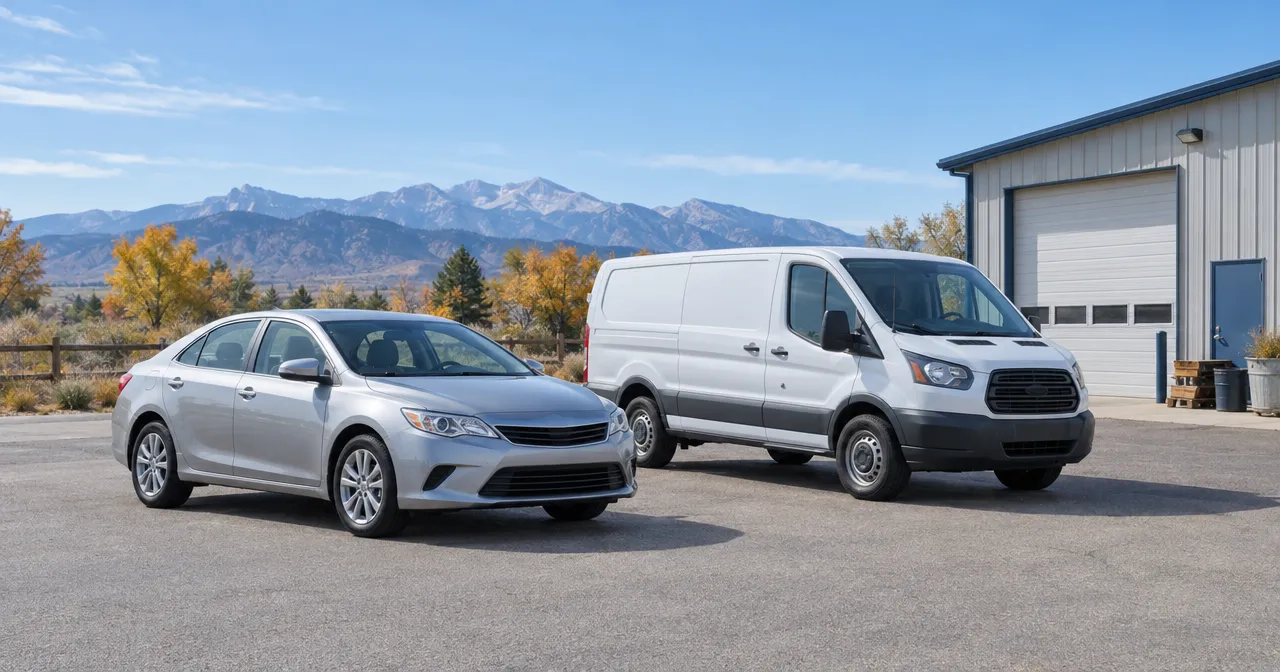
A Fort Lupton shop manager asks an employee to pick up a replacement part in Brighton. The employee takes their own sedan, just as they have done a dozen times before. If there is a crash on the way back, the insurance question is not simply, “Does the employee have car insurance?” The other driver might make a claim against the employee, the business, or both. The business owner's general liability policy may not be the policy that answers an auto claim.
The same question comes up when a business rents a van for a weekend job or borrows a vehicle to move equipment. Hired and non-owned auto (HNOA) liability coverage is designed to address some business liability involving vehicles the business does not own. It is not a substitute for every driver's auto policy or a blanket promise to repair the vehicle. Start by identifying which vehicles are used for work, who drives them, and which policy covers each exposure.
Separate owned, hired, and non-owned vehicles
Ownership and use matter more than the fact that a trip happens during business hours.
- Business-owned vehicle: A work truck or company car titled to the business ordinarily belongs on an appropriate commercial auto policy. Check the named insured, listed vehicles, drivers, uses, and physical-damage choices.
- Hired vehicle: A car, van, or truck the business rents, hires, or borrows for work may fall under hired-auto liability coverage, depending on policy definitions and the rental arrangement. Do not assume every long-term lease or personally rented vehicle is treated the same way.
- Non-owned vehicle: An employee's personally owned car used for a business errand is a common example. Non-owned auto coverage is intended to address qualifying liability exposure of the business, not replace the employee's own insurance.
The Travelers explanation of hired and non-owned auto coverage warns that commercial auto policies do not automatically cover vehicles a business does not own. A personal auto policy may provide some protection for an employee's car, but limitations vary by carrier. The important phrase is “may provide some protection,” not “the personal policy will take care of everything.”
A business with no fleet can still have a driving exposure. Consider a small accounting office whose employee makes an occasional bank deposit, a contractor who rents a pickup when a work truck is down, or a restaurant that starts offering deliveries. Their vehicles and trip frequency differ, so their insurance review should differ too. On its business insurance page, The Clement Agency lists commercial auto and hired and non-owned auto among the coverages it can help businesses review.
What the liability coverage is meant to do
HNOA generally focuses on claims for which the business is legally responsible after a covered work-related auto accident involving a qualifying vehicle. That could include bodily injury to someone else, damage to someone else's property, and covered defense costs, subject to policy terms and limits. Think of it as liability protection for the business, not insurance for every loss arising from that vehicle.
For example, an employee in a personal sedan is driving to collect supplies for a Frederick remodeling project. They rear-end another car. The other driver's repair bill and injury claim raise liability questions. The employee's personal auto insurer may be involved, and the business may also be named in a claim. How the policies coordinate—including which responds first, who qualifies as an insured, and whether the errand is an eligible business use—depends on the contracts and facts. Do not promise an employee that the company's HNOA endorsement automatically covers them personally.
Now suppose a business rents a van for a Longmont event and its driver damages another vehicle. Hired-auto liability may help with the business's covered liability to the other driver. It does not by itself answer whether the rented van's own damage, loss-of-use charge, or rental-company fees are insured. Those are separate questions for the commercial auto policy and rental agreement. The Hartford's HNOA overview distinguishes third-party liability from damage to the hired or employee-owned vehicle, employee injuries, and property stolen from a vehicle. That overview explains the coverage type; it is not the contract for your business.
Where other policies can leave a gap
A business owners policy is not a commercial auto policy. A BOP may combine property and general liability, but the NAIC's small-business insurance guide says BOPs typically do not include commercial auto. It also notes that standard commercial general liability is not intended to handle claims from operating a vehicle. A certificate of general liability insurance does not demonstrate that rented or employee-owned cars have auto liability coverage.
An employee's personal policy is not the business's policy. A personal insurer may ask how often a car is used for work and whether it is used for deliveries, carrying equipment, or transporting customers. Some uses may be covered, restricted, or excluded under a particular policy. Have employees confirm their own insurer's rules rather than guessing that a routine errand is always covered—or that any work use is always excluded. The NAIC advises owners relying on personal vehicles for business to inspect business-use provisions carefully.
HNOA liability does not automatically repair the car involved. An employee may need appropriate collision coverage on their personal policy to address their own car's damage after a covered crash, subject to its deductible and exclusions. A rented vehicle presents different physical-damage and rental-contract questions: ask about any hired-auto physical-damage option and its limits, deductibles, exclusions, and loss-of-use treatment. Cargo, tools, and equipment carried inside may call for another review. Do not infer coverage for them from the words “hired auto.”
A commercial auto policy can still be too narrow. An owner might have protection on a listed company truck but no hired or non-owned auto liability on the declarations page. Or an umbrella might sit above some underlying liability policies without automatically extending over HNOA. Ask your agent to identify the applicable covered-auto categories and whether any umbrella or excess policy follows the hired and non-owned exposure. Review the documents, not just the policy name.
Three everyday situations worth discussing before the drive
The occasional supply run in a personal car
An Erie hardware store employee sometimes takes their own car to pick up stock from a supplier. Record the task, how often it happens, and who approves it. Ask the employee to check whether their personal auto insurer permits that use; ask the business's agent whether non-owned auto liability is in force and how a claim involving both policies would be handled. If monthly trips change to daily trips, tell the agent. Actual use matters more than the word “occasional” on an old application.
The rented van for a short project
A Thornton contractor rents a van in the company's name for three days. Before pickup, establish who is authorized to drive, whether the rental agreement names the correct entity, what liability the rental company provides, whether the commercial policy includes hired-auto liability, and what would pay for damage to the van. Declining every option at the counter because “we have business insurance” is not a substitute for checking contracts. Bring the rental agreement and quote details to your agent before the trip.
A business changes how it delivers
A Fort Lupton cafe starts asking staff to use their own cars to take orders to customers in Brighton. This differs from a once-a-month office errand. Tell the business insurer about the delivery activity and the personal auto insurers how the cars will be used. Ask about driver eligibility, delivery exclusions, territory, liability limits, and whether a delivery platform offers insurance with specific active-trip rules. Do not assume a platform's policy, if any, closes every gap. If the business eventually buys a vehicle, it needs a new owned-auto review rather than simply relying on non-owned coverage.
These are planning examples, not predictions about whether a particular claim would be paid. A claim decision turns on the driver, trip, contracts, and policy wording.
Colorado minimums are a floor, not a loss estimate
The Colorado Division of Insurance's small-business guide says company-used vehicles must be properly insured whether owned, borrowed, or leased. It lists state minimum liability limits of $25,000 per person for bodily injury, $50,000 per accident for bodily injury, and $15,000 per accident for property damage. An injured party may seek more than those minimum amounts from a business or vehicle owner when losses are greater.
A simple illustration shows why a minimum-limit assumption can be risky. If a covered at-fault accident results in $42,000 of damage to someone else's vehicle and the applicable property-damage liability limit is $15,000, the limit is $27,000 below that illustrated damage amount. The example does not tell you who pays a shortfall: fault, coverage, other available insurance, and claim facts all matter. It does show why owners should compare liability limits based on the exposure, not only on legal minimums.
For HNOA, ask what liability limit applies to hired and non-owned vehicles and how it coordinates with any employee-owned car policy, rental-company coverage, or commercial umbrella. The business may have a high general liability limit while a separate auto exposure is insured differently—or not included. Compare the auto line and its covered uses, not a large number shown elsewhere on a certificate.
A practical coverage review for owners
Take one page to describe every way the business uses vehicles: company cars, staff-owned cars, vehicles the owner personally owns, short-term rentals, borrowed trucks, and delivery or client-transport arrangements. For each, write down the named owner, regular drivers, typical work trips, and approximate frequency. This tells an agent more than “We don't have company cars.”
Then ask for clear answers to these questions:
- Which policy applies to which vehicle? Are owned, hired, and non-owned autos each included for the activities we actually perform? Where does the declarations page show that?
- Who is insured? Does coverage protect only the business, or does it also address an owner or employee in this situation? Does the answer change with a personally titled owner vehicle?
- How do policies coordinate? What personal auto liability limits should employees maintain, and how would their policy interact with the business's coverage? What happens if their insurer excludes the described use?
- What is not covered? How would we handle damage to an employee's car or rented van, injury to the driver, tools in transit, rental-company charges, and purely personal trips?
- What changes require a call? Would adding deliveries, hiring a frequent driver, transporting clients, using a larger rental truck, or buying a company vehicle change the policy or premium?
- What do we have in writing? Can we see the endorsements, applicable limits, effective date, exclusions, and any umbrella requirements—not just a summary certificate?
For the broader mix of liability, property, and workers' compensation policies a business might need, see our Colorado small-business commercial insurance guide. It is a useful companion, but does not replace checking the auto-specific terms of your policy.
Pair the coverage review with a simple driving process. Decide who may run errands, check licenses and driving records as appropriate, communicate rules against distracted driving, and keep a record when employees begin making regular deliveries or rental trips. Travelers recommends approving drivers and monitoring non-owned vehicle use as part of road-safety planning. Insurance responds to certain losses after the fact; a clear process for who drives and why helps prevent confusion before a trip begins.
If your Colorado business uses employees' cars, rents vehicles, or is changing how it delivers, The Clement Agency can help you review the driving pattern and compare relevant commercial auto options. Request a quote or coverage review and share a few real examples of the trips your team makes.